Tidal Disruption Events
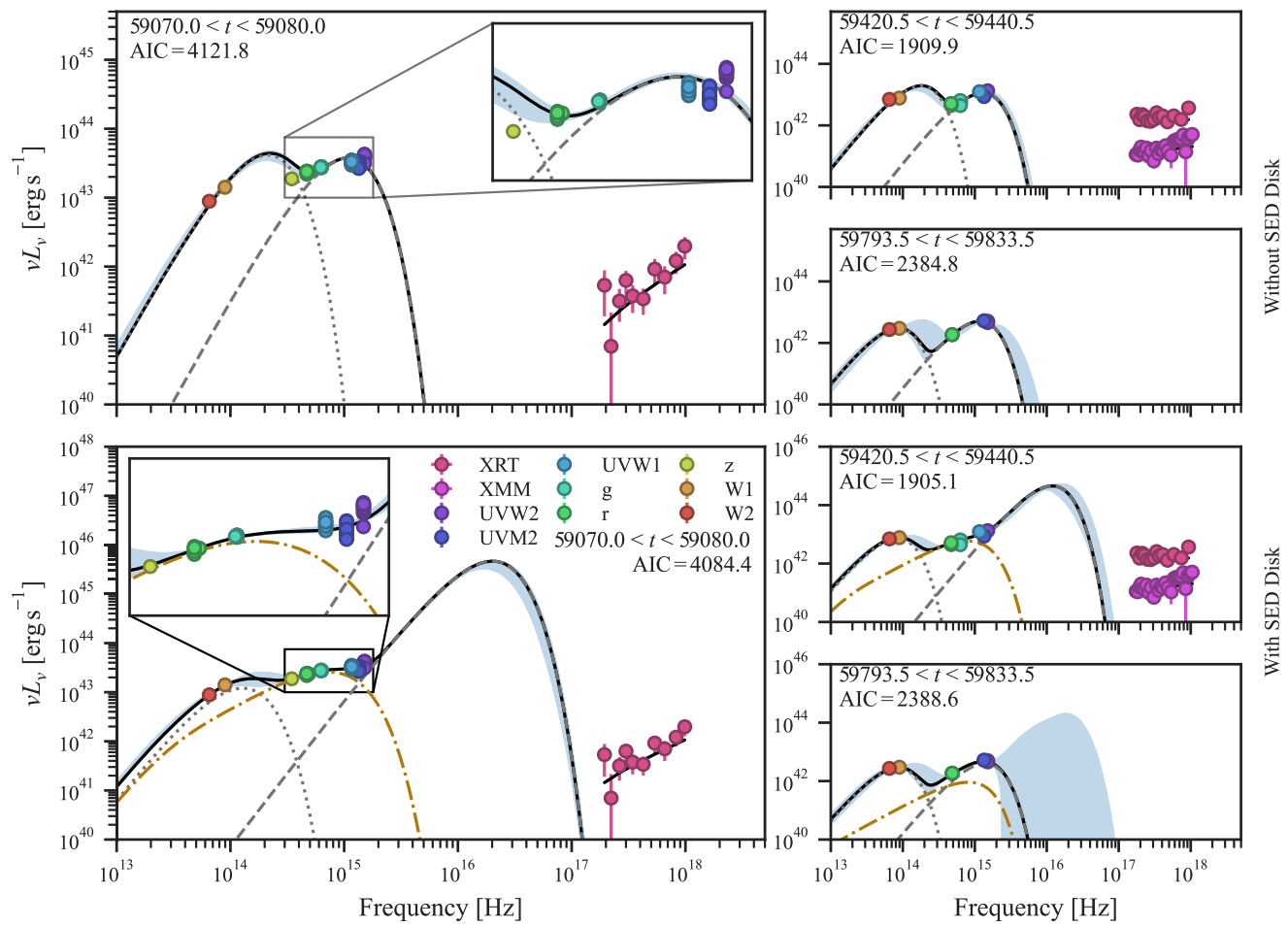
TDEs provide a rare opportunity to observe black hole accretion turn on in an otherwise quiescent galaxy. My work focuses on multi-wavelength observations of individual events, connecting their photometric and spectroscopic evolution to accretion disk geometry and black hole properties.
Selected publications
- AT 2020nov: Evidence for Disk Reprocessing in a Rare Tidal Disruption Event ApJ 983, 28 (2025)
- FEADME: A GPU-Accelerated Bayesian Modeling Engine for Relativistic Elliptical Accretion Disk Profiles arXiv:2512.10228 (2025)
- JWST and Keck Observations of the Off-Nuclear TDE AT 2024tvd arXiv:2510.12572 (2025)
Nuclear Variability & AGN
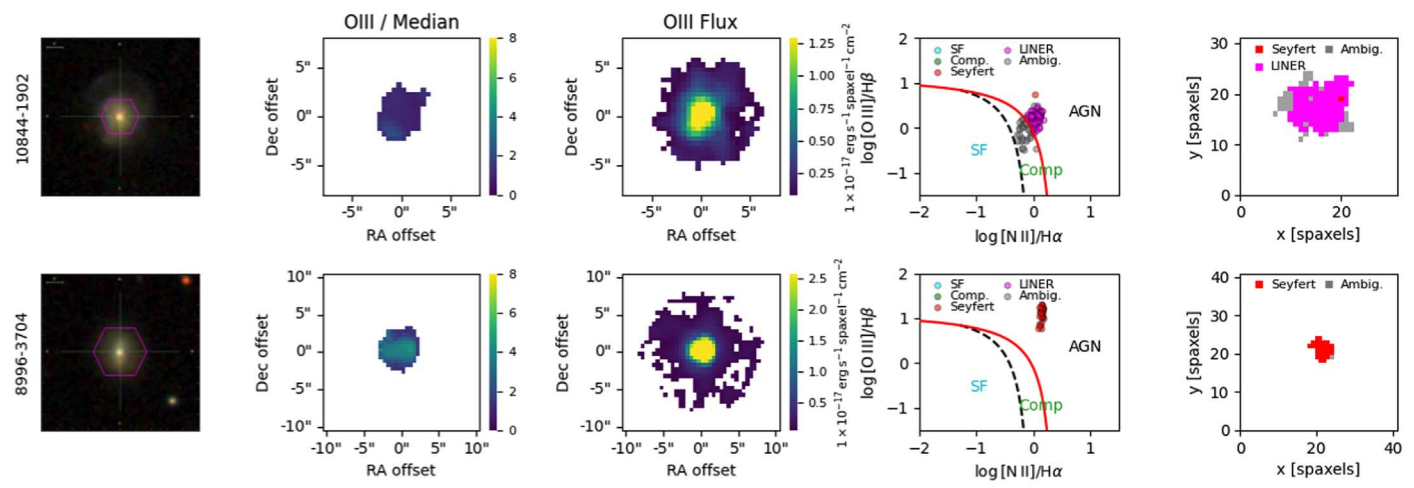
Distinguishing TDEs from AGN in photometric surveys is genuinely difficult, and misclassification affects the science of both populations. My work connects nuclear transient behavior to host-galaxy properties, with particular attention to post-starburst galaxies, and develops classifiers for separating the two populations in survey data.
Selected publications
- Fading AGNs in Poststarburst Galaxies ApJ 950, 153 (2023)
- Radio Variability in Recently Quenched Galaxies: The Impact of TDE or AGN-Driven Outflows ApJ 992, 123 (2025)
- A Large-scale Search for Photometrically Variable AGN in Dwarf Galaxies Using YSE ApJ 985, 223 (2025)
Probabilistic Modeling
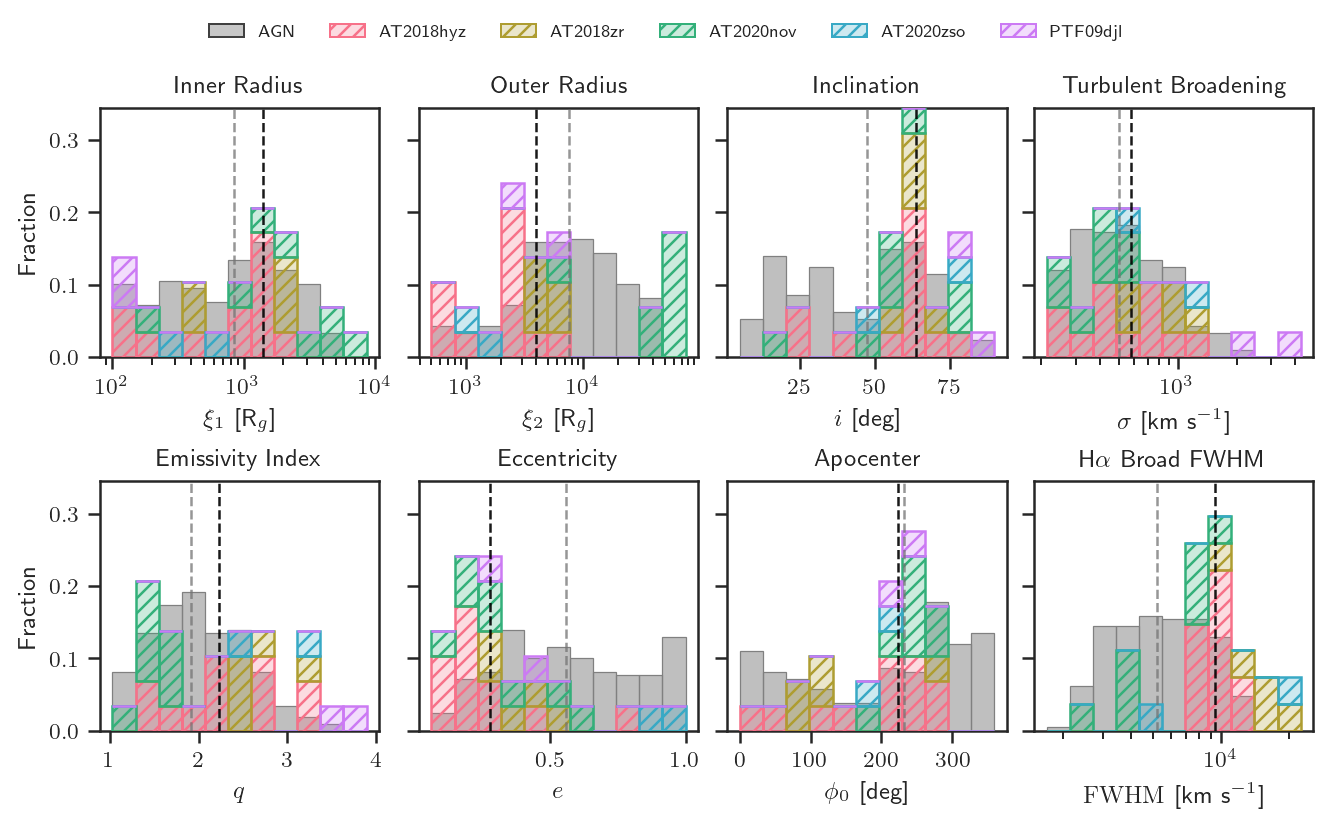
Fitting physically motivated spectral models to TDE and AGN data requires robust Bayesian inference with well-characterized uncertainties. My work in this area centers on FEADME, a JAX/NumPyro framework for fitting relativistic accretion disk profiles to double-peaked emission lines on GPU hardware.
Selected publications
ML for Transient Classification
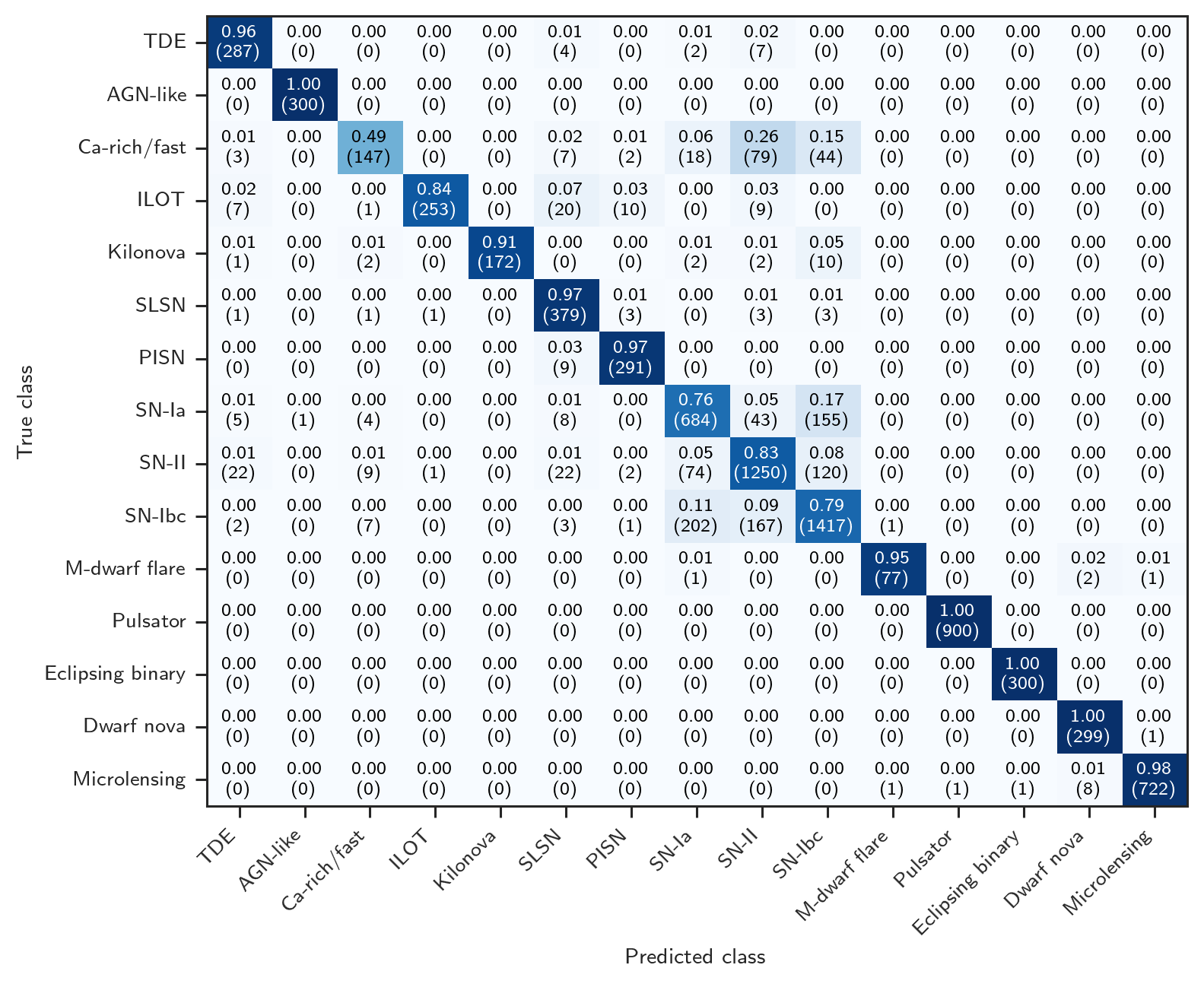
Rubin/LSST will produce far more nuclear transient alerts than can be followed up spectroscopically, requiring classification from photometric light curves alone. My work develops neural process and transformer-based models for early-time classification on irregularly sampled, multi-band data, with a particular focus on TDE identification.
Selected publications
- NAPTIME: A Neural-Process Framework for Rubin Alert Classification arXiv:2607.19236 (2026)
Circumgalactic Medium
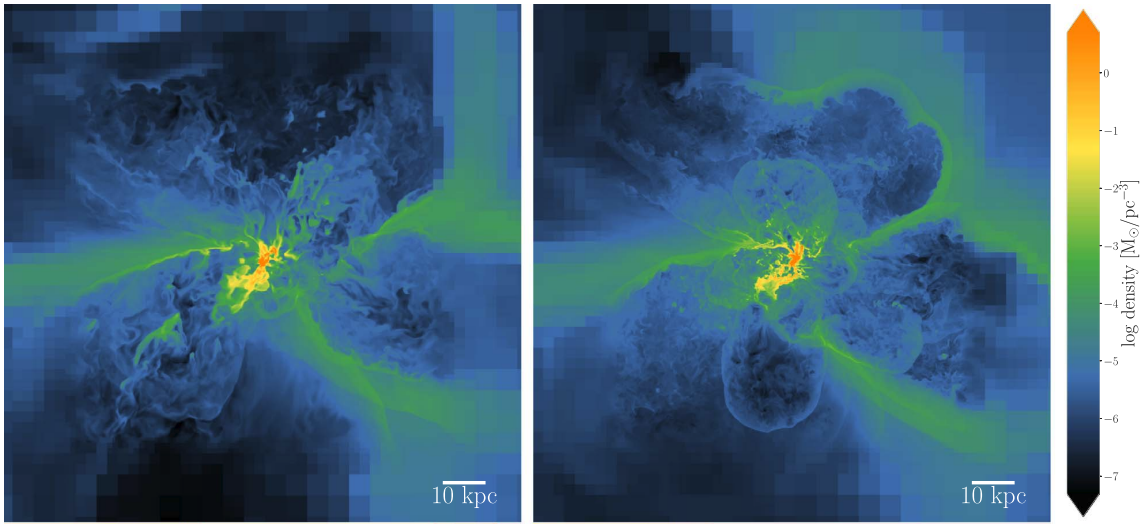
Before my PhD, I worked on the circumgalactic medium (the diffuse gas surrounding galaxies) using UV absorption spectroscopy. I developed Spectacle, a line-analysis package for absorption spectra, and used it to study how simulation resolution affects CGM kinematics, comparing simulated absorbers directly to HST/COS observations.
Selected publications
- Figuring Out Gas & Galaxies in Enzo (FOGGIE). I. ApJ 873, 129 (2019)
- Diagnosing the Multiphase CGM HST Program AR-14560 (PI)